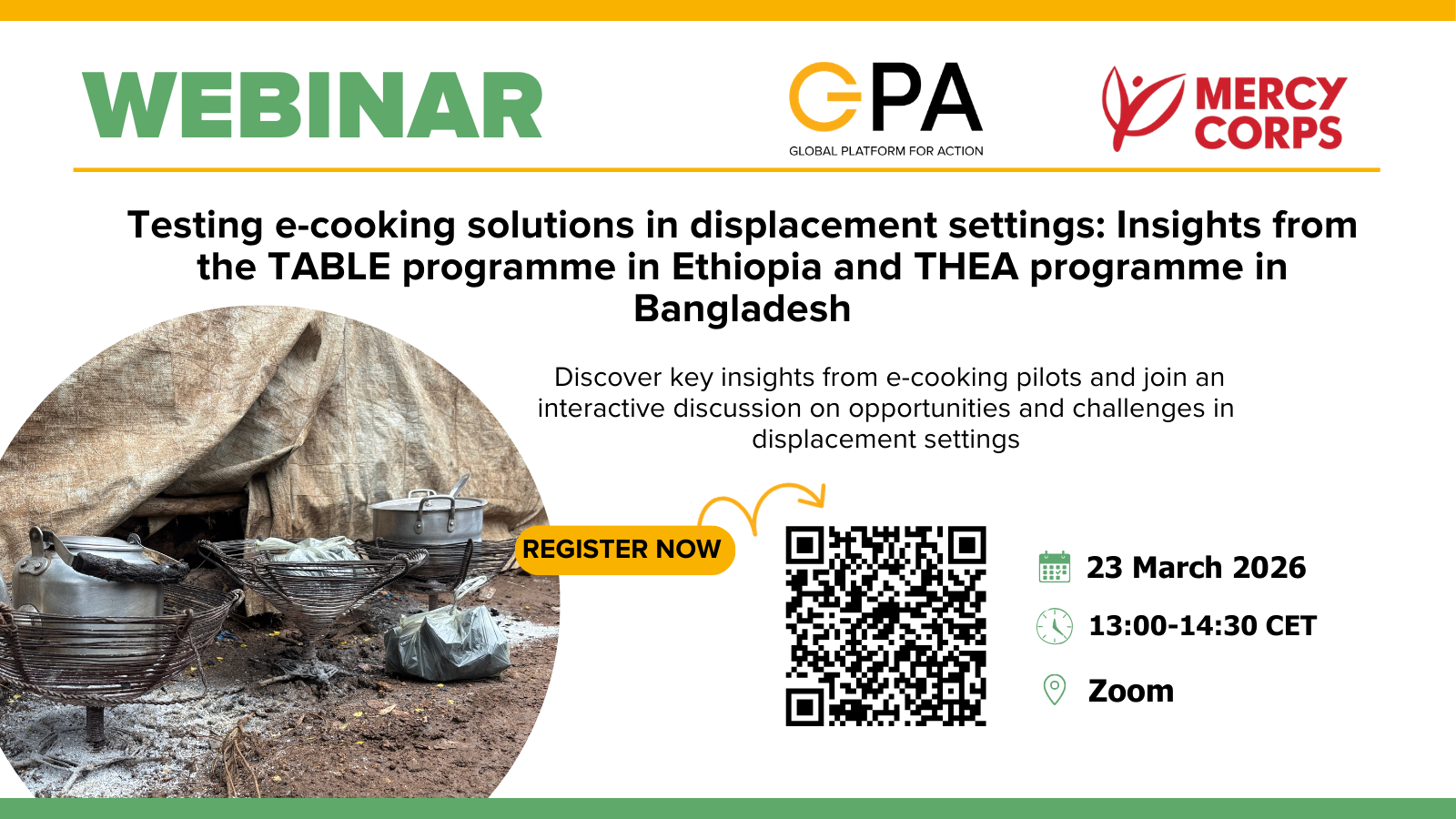
The global humanitarian crisis is rapidly growing, yet energy access remains a systemic blind spot, often delivered through short-term, fragmented pilots. Recent studies in Ethiopia and Bangladesh, part of the TABLE and THEA programmes, offer key insights into the feasibility and impact of electric cooking (e-cooking) in refugee and displacement settings.
Case Study 1: E-cooking in Sheder, Ethiopia
An e-cooking study was initiated in Sheder Refugee Camp, powered by a 254 kWp solar PV mini-grid from Humanitarian Energy PLC (HumEn). The pilot aimed to test and scale a viable electric cooking model in a refugee settlement.
Infrared Stoves Showed Highest Potential: When cost barriers were removed in Phase 3, infrared stoves almost completely displaced other fuels, accounting for 93% of cooking events. This high adoption was attributed to their compatibility with traditional cookware, including the ability to prepare culturally important foods like injera.
Cost Barriers are Primary: The removal of electricity costs in Phase 3 led to a dramatic increase in e-cooking adoption. However, a full transition was not universal, with some households continuing to use charcoal due to practical limitations like appliance size and single-burner configurations for large family meals.
Financing is Critical: While attitudes toward e-cooking were overwhelmingly positive, households showed unwillingness to purchase appliances at full market cost. They strongly preferred flexible, low-risk financing models such as Pay-As-You-Go (PAYG) and lease-to-own options over microfinance or on-bill financing.
Dual Impact: The pilot demonstrated that e-cooking drove financial savings for households and simultaneously increased revenues for the mini-grid operator.
Case Study 2: E-cooking Pilot in Cox’s Bazar, Bangladesh
In the Rohingya refugee camps, LPG has been scaled up and helped reduce deforestation. However, LPG still presents challenges like supply gaps, high operational costs and aid dependency. The Transforming Humanitarian Energy Access (THEA) Programme is now assessing the feasibility of solar PV powered e-cooking to build on previous efforts.
Demand Exists: A MECS-funded study found that 82% of refugees and 65% of host community households are willing to adopt e-cooking.
Main Concerns: The primary barriers to adoption are the high upfront cost (cited by 79% of refugees), unreliable electricity, repair issues, and food taste.
THEA’s Approach in Bangladesh: The pilot, running from October 2025 to October 2026, focuses specifically on financial feasibility. The delivery model involves procuring and providing systems for 100 refugee households and utilizing market-based approaches for 200 host community households. Core components include carbon finance modelling, cost-benefit analysis, and establishing an appliance repair hub within the refugee camp to address maintenance concerns.
Focus on Sustainability: Project components include carbon finance modelling, cost-benefit analysis, and establishing an appliance repair hub within the refugee camp.
These pilots clearly show that e-cooking is not just a cleaner alternative; it’s a viable model that drives financial savings, supports cultural practices with compatible appliances, and bolsters the financial stability of the energy provider. The path forward requires overcoming challenges related to high initial costs through flexible financing and establishing robust repair and maintenance support, guided by a market systems approach that partners with the private sector and uses evidence from pilots to design effective financing mechanisms like targeted subsidies and carbon finance.
Resources
60decibels (2025) Humanitarian Energy Impact Insights Report
UNEP-CCC, WFP, GPA (2025) Financing and business models for PV-supported clean cooking
GPA (2026) READS Bangladesh report
Last updated: 24/03/2026