In this section
In this sectionThe IEA Ministerial 2026, ahead of the Clean Cooking Summit for Africa, made one thing clear: clean cooking has decisively moved from the margins to the centre of the global energy conversation.
What struck me most was the shift in tone: across ministers, financiers and private sector leaders, clean cooking was no longer framed as a niche social issue — but as a core pillar of energy planning, infrastructure investment and climate strategy.
The Netherlands emphasised that clean cooking is now embedded within broader energy access agendas and international institutions. Kenya’s Minister of Energy and Petroleum put it straight: with more than one billion people still cooking on polluting fuels, “action is needed now” to meet 2030 commitments. Clean cooking is no longer an add-on — in Kenya it is now central to the revised Energy Policy 2025–2034 and the country’s Energy Compact.
Norway reinforced this: clean cooking is not a side issue but a core responsibility, one that must be built into energy and infrastructure planning from the beginning. Tanzania echoed this pragmatism — all technologies have a role to play, implementation and scale are the real test, and solutions must be sustainable and resilient. Notably, Tanzania’s ban on charcoal in large institutions signals how policy can drive systemic shifts — especially in schools and public facilities.
While there was a lot of focus on LPG and multiple oil and gas companies were represented, the underlying message by many including the Clean Cooking Alliance was clear: this is a multi-fuel, multi-pathway transition. LPG, ethanol, biogas, e-cooking, improved biomass will all play a role, and different markets will scale differently. The goal is not to privilege one solution, but to ensure that solutions reach households and institutions at scale.
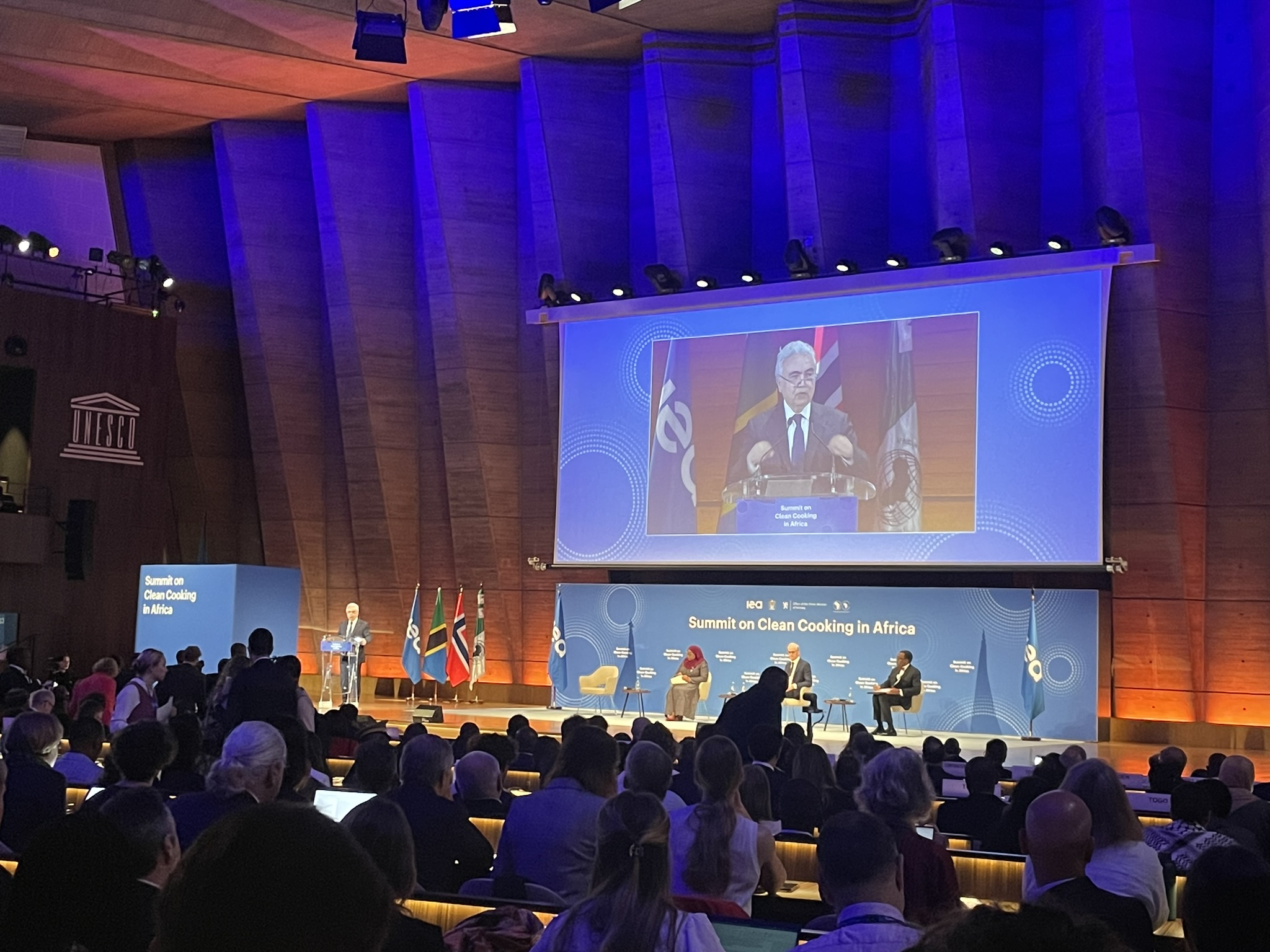
Dr Fatih Birol - Executive Director of the IEA, delivering opening remarks at the 2024 Clean Cooking Summit for Africa held in Paris.
Finance: The Persistent Gap
If technology is no longer the primary barrier, finance certainly remains one.
Senegal put it plainly: “Technology is no longer the main challenge — financing is.” Kenya acknowledged that current finance flows are far below what is needed to reach universal access by 2030. The World Bank, ENABEL and Africa50 all highlighted the same tension: capital exists, but bankable, scalable pipelines remain limited. According to the World Bank, DFIs alone cannot fund this transition — private sector engagement is essential and will have to be among the main drivers of boosting financial flows into the clean cooking sector.
The strengthened collaboration between the Clean Cooking Alliance and the IEA signals a new phase: rooting clean cooking firmly within global energy planning, investment frameworks and market architecture. Smart capital, clear policy and aligned incentives can unlock scale — but roles must be clear, regulation must create trust, and affordability must remain front and centre.
While commitments such as the EU’s €400 million support across Kenya, Tanzania and Ethiopia show momentum, the scale of the challenge demands much more, and faster.
Why This Matters for Fragile and Displacement Contexts
Listening to the Ministerial discussions, I was reminded how critical it is that fragile and displacement settings are not left behind in this acceleration. The over 40 million displaced people lacking clean cooking access, and the many more affected by crisis must be consider if the clean cooking transition is to be just and equitable.
The burden of polluting cooking fuels is unequally distributed — and that inequity is amplified in refugee-hosting and last-mile contexts. As we work through GPA and NORCAP to integrate clean cooking into national energy planning, we must ensure that delivery units, investment plans and financing models explicitly account for displaced populations and the institutions that serve them.
Institutions — particularly schools, health centres and community kitchens — were referenced repeatedly in discussions about policy and regulation. Tanzania’s charcoal ban for institutions serving more than 100 people is a powerful example. Clean cooking transitions must include these public facilities if we are serious about systemic impact. Institutional cooking is not peripheral — it is central to health, education and environmental outcomes.
At the same time, electrification is accelerating across Africa. Clean cooking should “ride the electrification wave,” as Norway put it, but we must also ensure that Tier 4+ solutions are viable in refugee-hosting settings and other last mile communities where grid access remains sparse. Through initiatives like SOLCO, we are working toward solar-supported Tier 4+ cooking models that move beyond incremental improvements toward truly clean, resilient systems — integrating energy access, climate finance and market development.
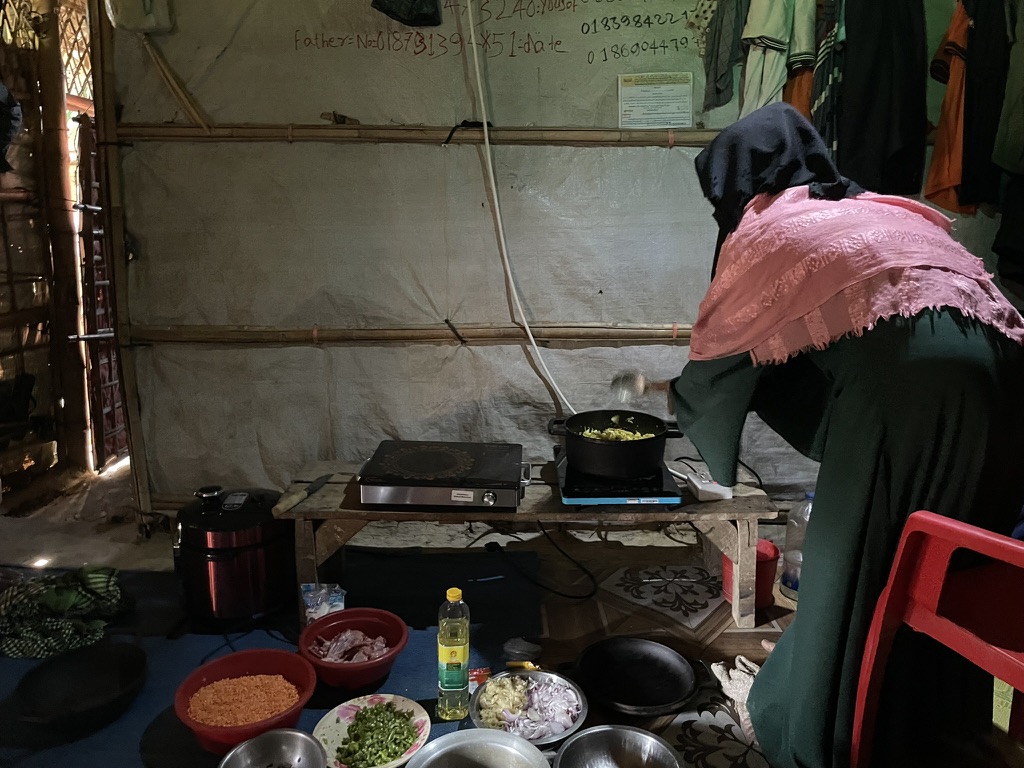
A Rohingya refugee in Cox's Bazar testing induction and infrared stoves for lunch preparation. Photo: I.Bisaga
Looking Ahead to Nairobi
The upcoming IEA Clean Cooking Summit for Africa in Nairobi set to take place on 9-10 July 2026 will be a critical moment. The narrative has shifted and the political will is visible: clean cooking strategies are being launched across Africa with clean cooking delivery units already in place in countries such as Kenya, Uganda and Sierra Leone.
But Nairobi must be about implementation, inclusion and scale. What will be key to truly moving the needle on clean cooking?
- Ensuring that clean cooking is fully embedded in NDCs and climate finance frameworks.
- Strengthening regulatory environments that build investor confidence.
- Closing the affordability gap.
- Ensuring that last-mile, rural and displacement settings are not an afterthought.
Clean cooking is solvable — as many at the Ministerial noted. The question is no longer whether we can do it but whether we will align finance, policy and delivery at scale quickly enough to meet 2030 goals. Nairobi will be the next big test for the clean cooking sector, and the energy sector at large.
Written by: Dr. Iwona Bisaga, Clean Cooking Lead for the Global Platform for Action (GPA) and NORCAP
Last updated: 26/02/2026