In this section
In this sectionThe Roundtable on Electrification for Economic Development in Displacement Hosting Regions, organised by GPA in collaboration with Renewvia, Humanitarian Energy PLC and Humenergi, highlighted a critical pivot in humanitarian support: moving beyond perpetual aid to catalytic, market-based investments. The challenge is stark: 40 million forcibly displaced persons (FDPs) currently lack access to electricity, while humanitarian agencies spend an estimated $100 million annually on 11,000 diesel generators. With protracted crises becoming the norm—accounting for 96% of funding appeals in 2025—energy access is no longer just a humanitarian issue—it is an economic enabler.
The roundtable showcased three pioneering models proving that sustainable electrification in displacement settings is viable, scalable, and fiscally responsible - leveraging public funding to attract private financing. Check out the pitch deck shared during the roundtable.
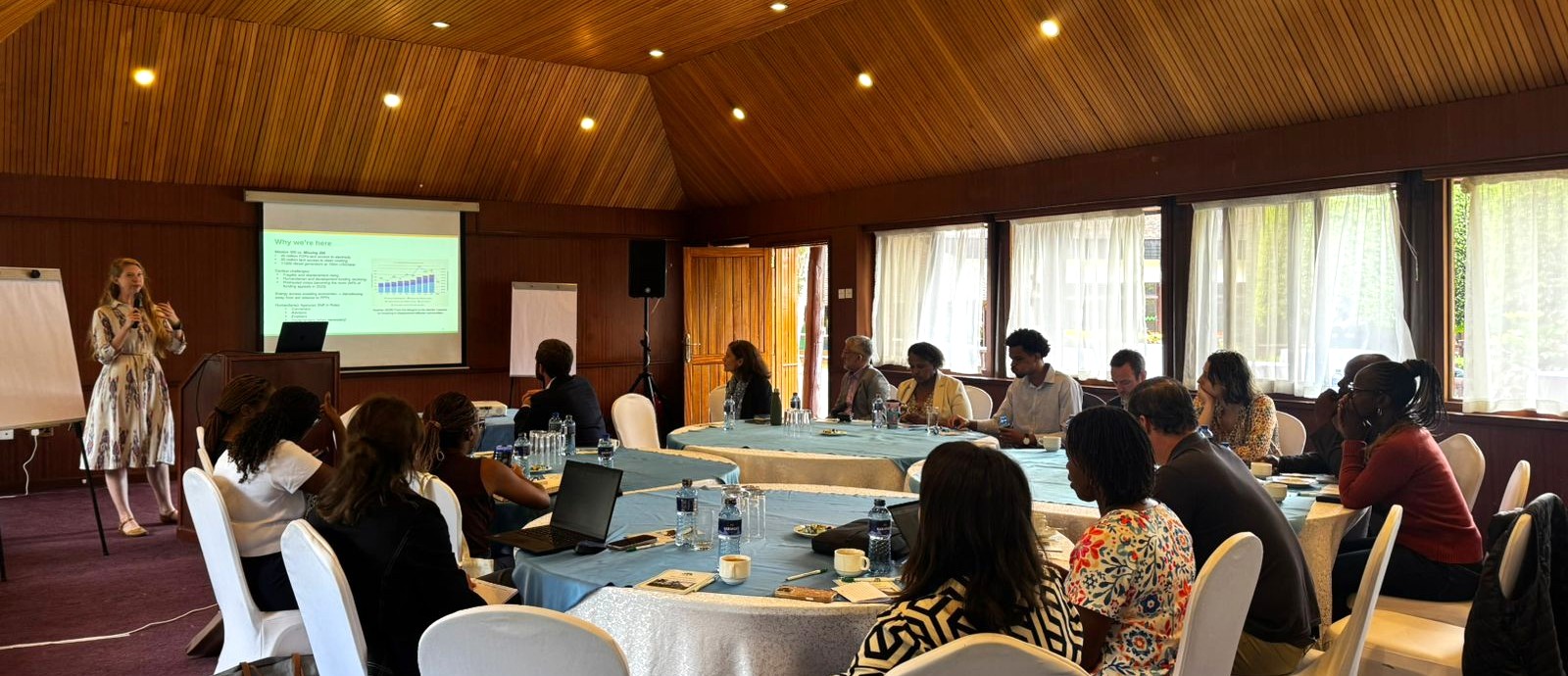
Renewvia presented a large-scale solution, seeking $35 million in concessional or blended financing to dramatically expand clean energy access in Kenya's Kakuma and Dadaab refugee camps. These camps, home to 575,000 people without electricity, represent a massive market opportunity. Renewvia's proposal involves 15.8 MW of solar and 39.1 MWh of battery storage to serve 105,000 total connections. Their existing 2.5 MW minigrid in Kakuma already demonstrates success, powering thousands of SMEs (from phone chargers and hair trimmers to carpentry and metalworking shops) and critical infrastructure like schools, telco towers, boreholes, and the largest camp hospital.
Mercy Corps, through the Enter Energy Ethiopia Initiative, fosters public-private partnerships to provide energy access to communities affected by displacement. As part of the Enter Energy initiative in Ethiopia, Mercy Corps co-founded Humanitarian Energy PLC together with Rensys Engineering and Trading PLC, which established the first commercial mini-grid licensed under Ethiopia’s current regulatory framework. The 245kWp system in Sheder refugee camp uses a blended finance structure to ensure affordability while covering operational expenses. The model is built on demand activation, using Productive Uses of Energy (PUE) to strengthen livelihoods, making it possible for 90% of customers to report decreased energy spending despite improved reliability. Humanitarian Energy PLC is replicating the model in Aw Barre refugee settlements, and is seeking further grant and concessional debt financing to expand to other regions in Ethiopia.
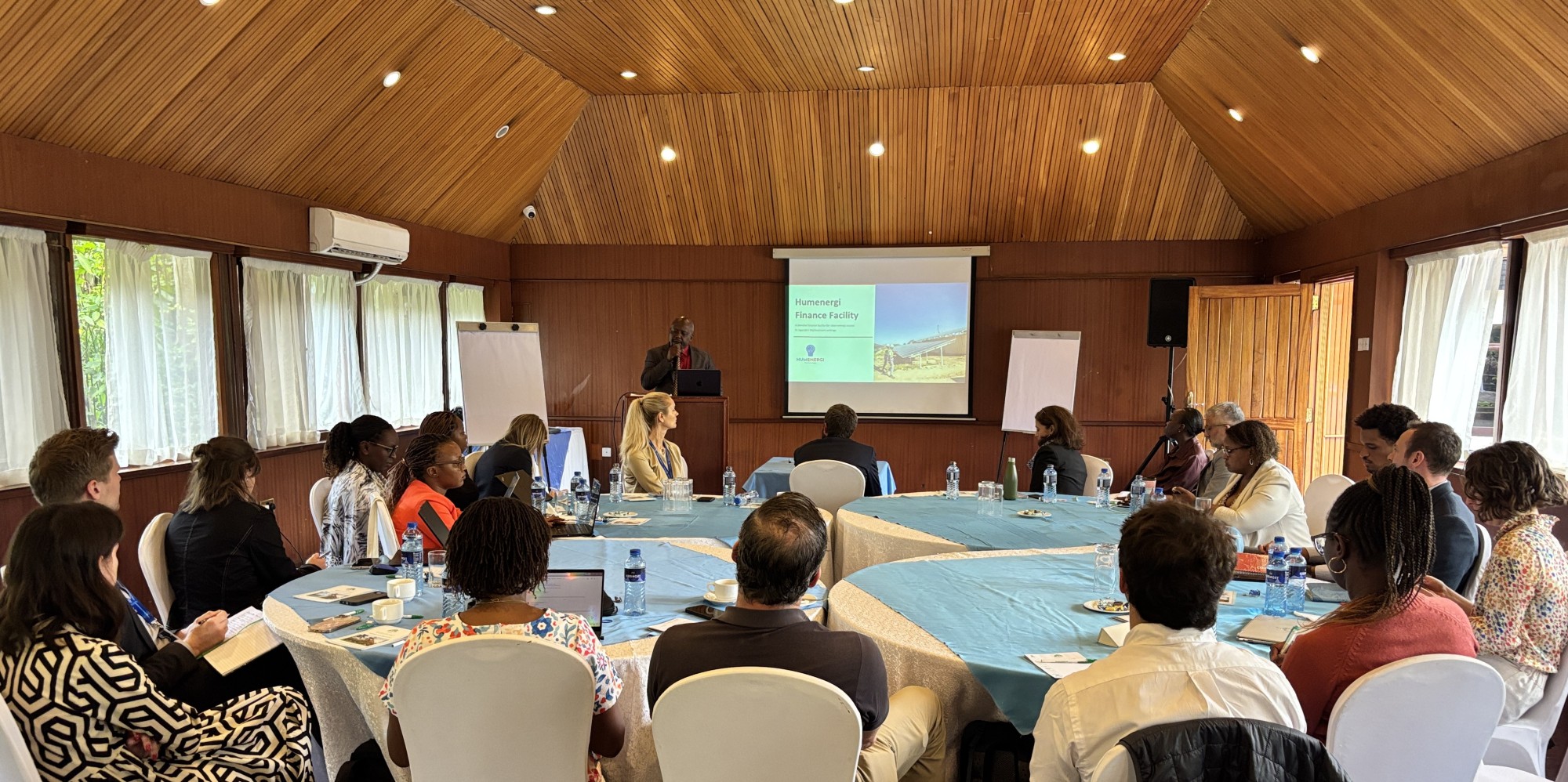
Established by Mercy Corps, Humenergi Uganda Ltd. is an independent blended finance facility providing concessional, recyclable capital and cash-flow aligned lending to fill the critical finance gap for Off-Grid Energy Companies (OGECs) and Refugee-led Organisations (RLOs). The goal is a structural innovation: capital is lent, recovered, and immediately relented, continuously compounding its impact without repeated donor asks. This process builds a credit history for successful borrowers, progressively attracting commercial capital. Humenergi has secured initial grant financing in 2026-2027, and is seeking further grant, concessional debt and equity financing for longer term capitalisation of energy service companies serving refugee hosting districts in Uganda.
These initiatives illustrate a fundamental shift in the role of humanitarian agencies—from primary implementers to strategic conveners and enablers of sustainable solutions. By prioritising durable, market-based solutions, the sector is paving a pathway for strengthening local economies in displacement settings.
Interested parties can reach the key focal points at: Douglas Cox, Renewvia Director of Africa Project Development (douglas@renewvia.com); Desalegn Getaneh (d.getaneh@humanitarian.energy) and Megan Taeuber, Mercy Corps Programme Manager (mtaeuber@mercycorps.org); Michael Muwonge, Humenergi Managing Director (m.muwonge@humenergi.com).
The Global Platform for Action (GPA) in Sustainable Energy in Displacement Settings is the global initiative accelerating SDG 7 in forced displacement and fragile contexts. The GPA Secretariat, hosted at UNOPS, is advised by key humanitarian and development organisations, and supported by the IKEA Foundation and the European Union’s Civil Protection and Humanitarian Aid Operations (DG ECHO), with in-kind support from NORCAP and the UK Foreign, Commonwealth & Development Office (FCDO) through the Transforming Energy Access (TEA) platform.

Last updated: 19/06/2026