Background
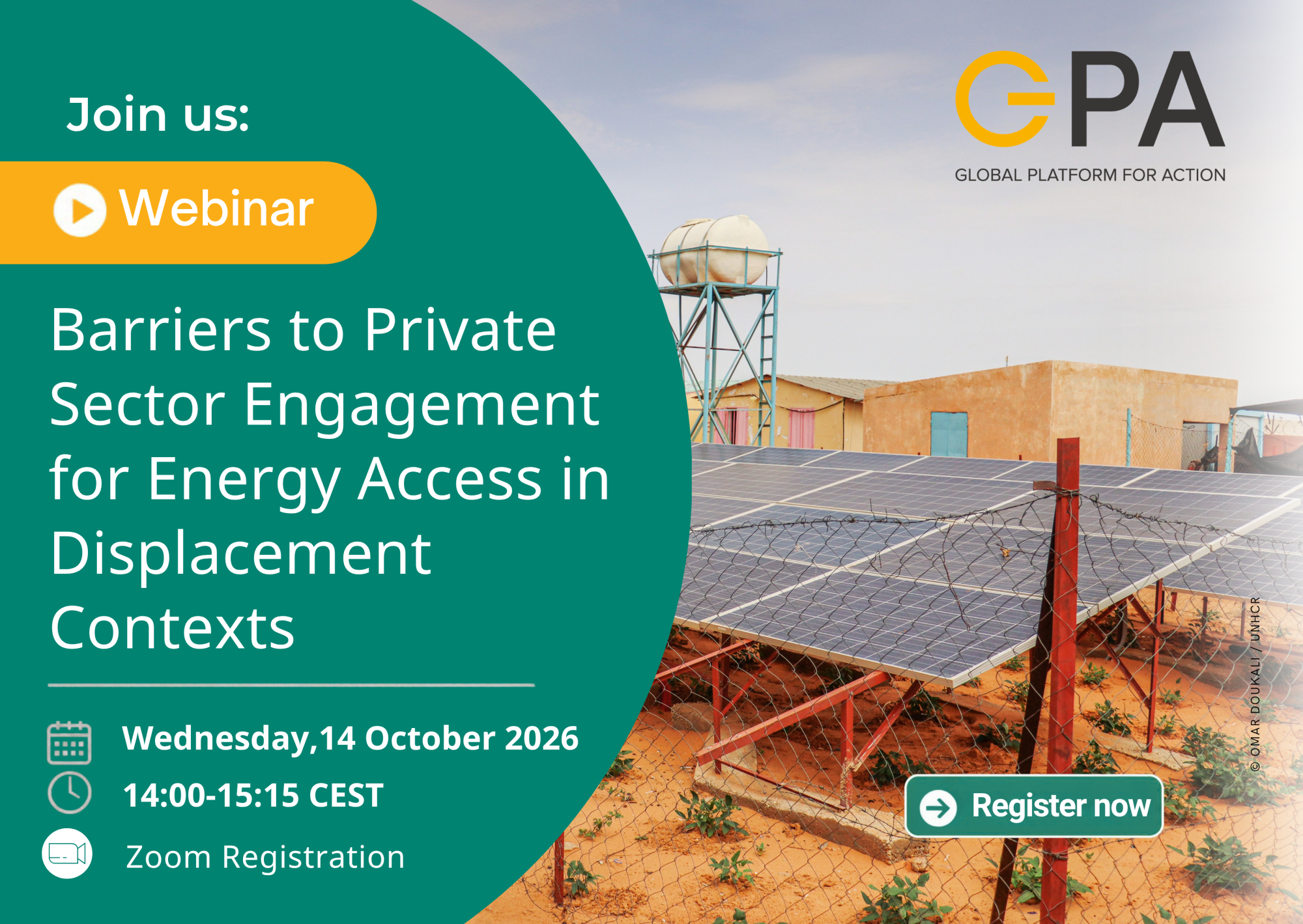
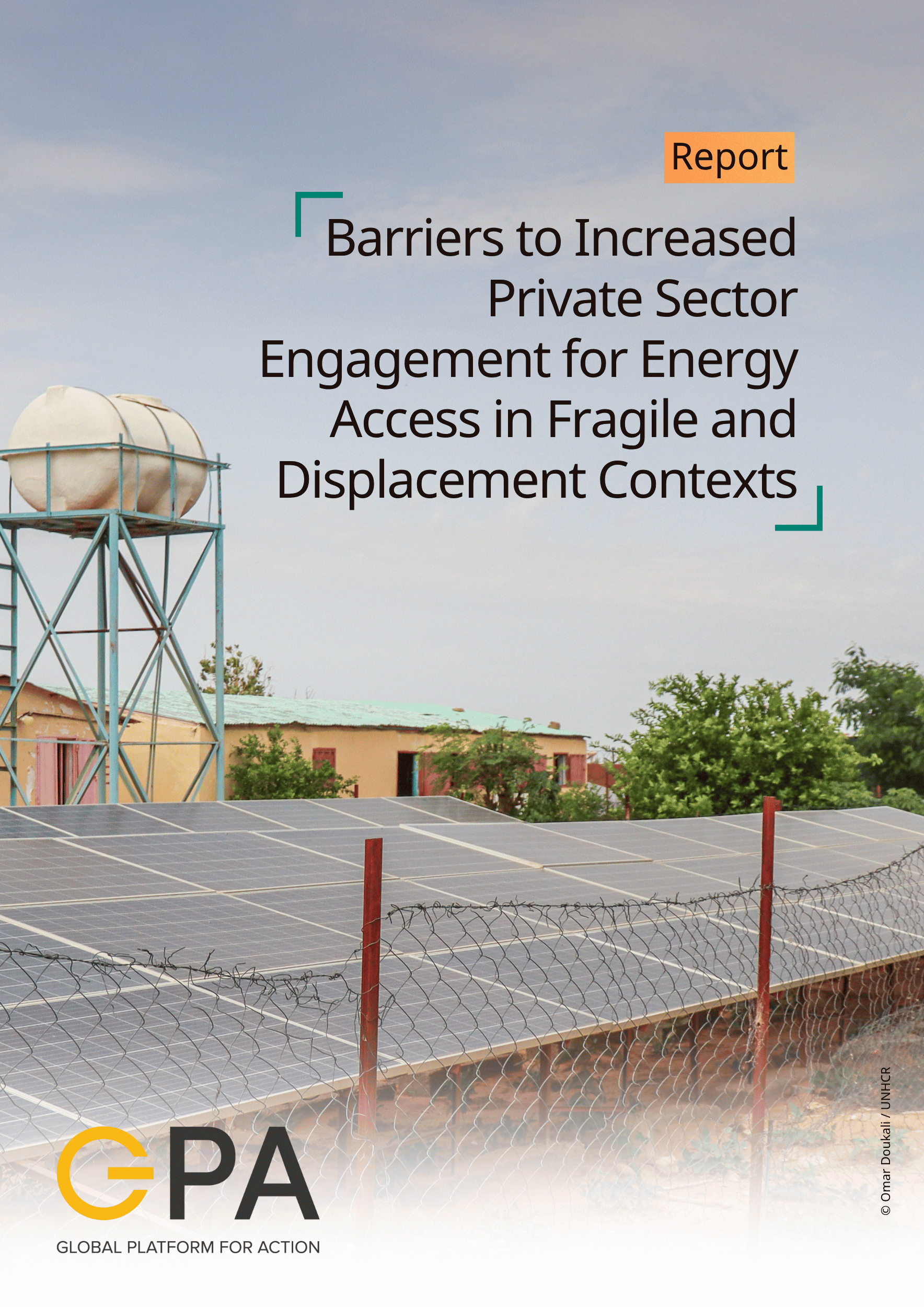
Of the 655 million people lacking access to energy, around 430 million are living in fragility, conflict and violence-affected (FCV) regions. Further, the GPA estimates that 50 million forcibly displaced persons (FDPs) lack access to clean cooking, and 37 million lack access to electricity. While the private sector and public utilities or subsidy programs in these contexts are essential to reaching the last frontier of electricity access, key barriers prevent action. This webinar explores these barriers outlined in GPA’s latest publication on Barriers to Private Sector Engagement – including affordability gaps, specific context risks, gaps in access to finance and TA, and enabling environment factors – with experts from energy companies, government, and humanitarian/development organisations. Join us for an interesting webinar on the recently launched report: Barriers to Private Sector Engagement for Energy Access in Fragile and Displacement Contexts
Target audience
- Energy access companies (mini-grid, off-grid solar, PURE appliances).
- Energy access investors and humanitarian/energy funders.
- Humanitarian and development partners.
- Government (ministries of energy, refugee response, utilities).
Date and Time
Wednesday, 14 October 2026, 14:00-15:15 CEST
Speakers
- Ben Butele, Programme Coordinator, Refugee Hosting District Energy Access - EASP, UECCC
- Baptiste Piveteau, Director of Partnerships and Products, MOON
- Jonathan Shaw, CEO, Nuru
- Anne Grootenhuis, Advisor, Energising Development (EnDev), RVO
This project is part of the Transforming Humanitarian Energy Access (THEA), funded by the Transforming Energy Access (TEA) platform. TEA is funded by the UK government, through its Global Research and Technology Development (GRTD) portfolio, and is part of the UK’s Ayrton Fund; the views expressed do not necessarily reflect the UK government's official policies.
Learn more about The Transforming Humanitarian Energy Access (THEA) programme here.
Missed the session? Watch the recording here.
Key Takeaways & Insights:
- Rethinking Models & Affordability: With 4 in 5 people in these settings unable to afford standard PAYG solar kits, flexible models like Energy-as-a-Service (EAS) help reach the base of the pyramid without saddling families with debt.
- De-risking Capital: High capital costs directly drive up end-user tariffs. Subsidising political risk insurance and securing longer-tenor concessional finance are game-changers for affordability.
- Empowering Local MSMEs: Routing patient capital through local financial institutions and bridging international suppliers with last-mile distributors creates sustainable local markets.
- Targeted Technical Assistance: TA must focus on funding and embedding core talent (like CFOs) directly into local teams rather than short-term consultancy fixes.
Last updated: 21/10/2026