
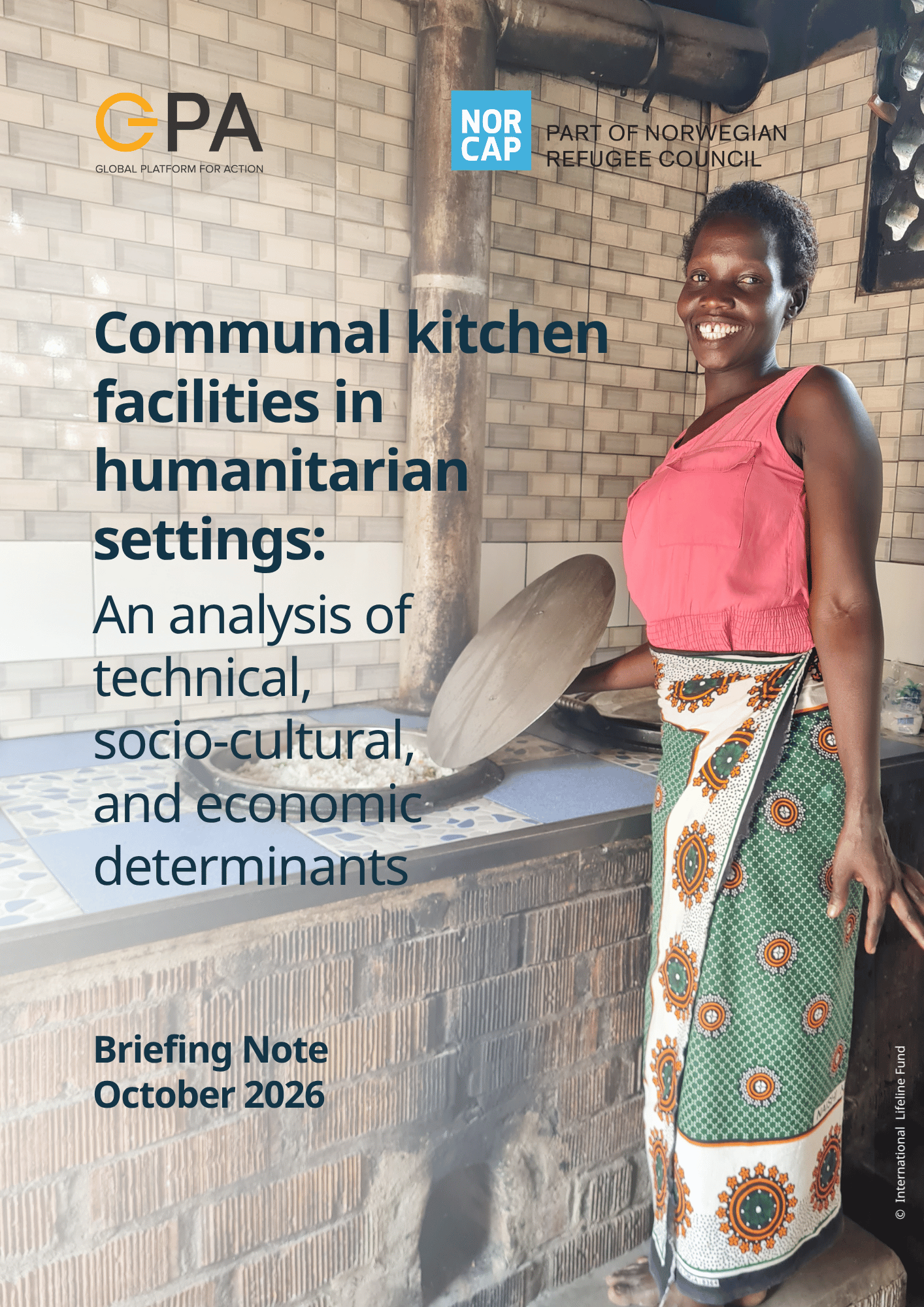
This briefing note examines the technical, socio-cultural and economic factors shaping the adoption and sustainability of communal kitchens in humanitarian and displacement settings. Drawing on experiences from Bangladesh, Uganda and Rwanda, alongside emerging models and supporting evidence from other contexts, it explores how cooking preferences, household autonomy, privacy, protection concerns and operational constraints influence their effectiveness. It considers alternative service models and financing approaches, including multi-service energy hubs, carbon finance and results-based financing. The brief provides practical recommendations for humanitarian agencies, donors and policymakers on designing and managing communal cooking facilities as voluntary, context-specific services within broader clean cooking strategies, while safeguarding the dignity and choice of displaced households.
Files
Last updated: 09/11/2026